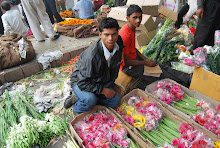
This a listing on my felings about my treks in the mountains and the kind of people who I have met there. The experience is a very spiritual one and it has been great going up into the mountains again and again... The Sunrises and Sun sets are breath taking!

Wednesday, November 05, 2008

'Change has come!' 'Change has come!'

Wed November 5, 2008
'Change has come'
Obama beats McCain
Barack Obama thumped John McCain in the Electoral College tally and handily won the popular vote, becoming the first African-American elected president of the United States. "Change has come to America," Obama told supporters.

CHICAGO, Illinois (CNN) -- Sen. Barack Obama did more than thump Sen. John McCain in the Electoral College tally; he also handily won the popular vote and redrew the great divide between red states and blue states.

Sen. Barack Obama addresses a crowd of more than 200,000 at Grant Park in Chicago, Illinois.

Sen. Barack Obama addresses a crowd of more than 200,000 at Grant Park in Chicago, Illinois.

Riding a Democratic tide that bolstered the party's presence in both houses of Congress, Obama snared about 62.4 million votes to McCain's 55.4 million, according to totals early Wednesday.

According to exit polls, Obama crushed McCain among women voters (56 percent to 43 percent); voters under 30 (66 percent to 32 percent); African-American voters (95 percent to 4 percent); Latino voters (66 percent to 32 percent); first-time voters (68 percent to 31 percent); and voters making less than $100,000 a year (55 percent to 43 percent).

"I think this is the passing of an old order," CNN senior political analyst David Gergen said as the results rolled in Tuesday night and the outcome became increasingly evident.

"I think what we see ... is a new coalition, a new order emerging. It isn't quite there, but with Barack Obama, for the first time, it's won. It is the Latino vote we just heard about. It is the bigger black vote that came out. Very importantly, it's the youth vote, the 18-to-29-year-old," said the Harvard University professor and former presidential adviser. Video Watch Obama pay tribute to McCain »

Early voting totals in the East suggested things would go traditionally, with McCain taking most of the Southeast, Obama most of the Northeast.

But then things quickly changed, as the senator from Illinois struck -- first in Pennsylvania and then in the Midwest state of Ohio, states McCain had to win in his bid for the Oval Office. Obama then delivered an uppercut in Virginia, a state that had not voted for a Democratic president since 1964. See your state's county-by-county totals

As polls closed from East to West, Obama kept hammering McCain, as he snatched away Iowa, Colorado, New Mexico and Nevada -- states that had been in President Bush's column in 2004. (Missouri, Indiana and North Carolina were still counting votes early Wednesday, but it appeared one or two of them could become blue-state converts as well.)

With McCain on the ropes, an Obama victory in Florida sounded the death knell. As the sun rose Wednesday, Obama had an insurmountable 338-163 lead over his rival in electoral votes, with only 37 undecided.

Obama told supporters Tuesday night that "change has come to America" as he claimed victory in a historic presidential election.

"The road ahead will be long. Our climb will be steep. We may not get there in one year or even one term, but America -- I have never been more hopeful than I am tonight that we will get there. I promise you -- we as a people will get there," Obama said in Chicago before an estimated crowd of up to 240,000 people.

With Obama's win, he becomes the first African-American to win the White House.

McCain pledged Tuesday night to help Obama lead. Video Watch more on the balance of power »

"Today, I was a candidate for the highest office in the country I love so much, and tonight, I remain her servant," McCain said.

The senator from Arizona called Obama to congratulate him, and Obama told him that he was eager to sit down and talk about how the two of them can work together.

Bush also called Obama to offer his congratulations.

The president told Obama he was about to begin one of the great journeys of his life, and invited him to the White House as soon as it could be arranged, according to White House spokeswoman Dana Perino.

Obama will be working with a heavily Democratic Congress. Democrats picked up Senate seats in New Hampshire, New Jersey, North Carolina and Virginia, among others. Read about the Senate races

"While the Democratic Party has won a great victory tonight, we do so with a measure of humility and determination to heal the divides that have held back our progress," Obama said.

Flanked by American flags, Obama told the roaring crowd, "This is your victory."

"To those Americans whose support I have yet to earn -- I may not have won your vote, but I hear your voices, I need your help, and I will be your president, too," he said. Video Watch Obama tell voters "all things are possible" »

Supporters in Chicago cheering, "Yes, we can," were met with cries of "Yes, we did."

More than 1,000 people gathered outside the White House, chanting "Obama, Obama!"

Sen. Hillary Clinton, Obama's former rival for the Democratic nomination, said in a statement that "we are celebrating an historic victory for the American people." iReport.com: Share your Election Day reaction with CNN

"This was a long and hard fought campaign, but the result was well worth the wait. Together, under the leadership of President Barack Obama, Vice President Joe Biden and a Democratic Congress, we will chart a better course to build a new economy and rebuild our leadership in the world."

Sen. Edward Kennedy said Americans "spoke loud and clear" in electing Obama.

"They understood his vision of a fairer and more just America and embraced it. They heard his call for a new generation of Americans to participate in government and were inspired. They believed that change is possible and voted to be part of America's future," the Massachusetts Democrat said in a statement.

Voters expressed excitement and pride in their country after casting their ballots in the historic election. Poll workers reported high turnout across many parts of the country, and some voters waited hours to cast their ballots. Read about election problems

advertisement

Tuesday marks the end of the longest presidential campaign season in U.S. history -- 21 months.

Obama, 47, will begin his transition to the White House. He will be sworn in as the 44th president on January 20.


Tuesday, November 04, 2008

The Garden


For the garden of your daily living Plant three rows of peas:
  1. Peace of mind
  2. Peace of soul
  3. Peace of heart
Plant four rows of squash:
  1. Squash gossip
  2. Squash indifference
  3. Squash grumbling
  4. Squash selfishness
Plant four rows of lettuce:
  1. Lettuce be faithful
  2. Lettuce be kind
  3. Lettuce be patient
  4. Lettuce really love one another
No garden is complete without turnips:
  1. Turnip for meetings
  2. Turnip for protesting injustice
  3. Turnip to help one another
And in our garden we must have enough thyme:

  1. Thyme for each other
  2. Thyme for family
  3. Thyme for friends
Water freely with patience and cultivate with love.There is much fruit in your garden because you reap what you sow -----Marguerite Theophile


Gardening is a wonderful, restorative activity. Being in touch with Mother Earthis a wonderful way to preserve your mental health-----Thich Nhat Hanh

Monday, November 03, 2008

Passing Away of Uncle Shammi Nanda

Shammi Nanda passed away on the 28'th of October it was an auspicious day Diwali as per the Hindu Calender and it was Arjun Krishan Nanda's Birthday too.
In grife
  • Arti Nanda Wife
  • Arjun Krishan Nanda Son
  • Sachin Nanda Son
  • Preeti Daughter In - Law
  • Kretti Daughter In - Law
  • And Grand Children
  • All Relatives, Friends and all who came in contact with Uncle...


We all pray that his Soul attains Peace

Hari Om Tat Sat!


Jageshwar Dham


Shammi Nanda Ji and Family 1999


Flowers in the higher altitudes


Krishan Bhagwan Ji's Murti Decorated on Janamastami at Sivanada Ashram Rishikesh 2008


Krishan and Balram Iskon Brindavana


My Girl!


song: My Girl (December, 1964) artist: Temptations I've got sunshine on a cloudy day. When it's cold outside I've got the month of May. I guess you'd say What can make me feel this way? My girl (my girl, my girl) Talkin' 'bout my girl (my girl). I've got so much honey the bees envy me. I've got a sweeter song than the birds in the trees. I guess you'd say What can make me feel this way? [ Find more Lyrics at www.mp3lyrics.org/gQ1 ] My girl (my girl, my girl) Talkin' 'bout my girl (my girl). Hey hey hey Hey hey hey Ooooh. I don't need no money, fortune, or fame. I've got all the riches baby one man can claim. I guess you'd say What can make me feel this way? My girl (my girl, my girl) Talkin' 'bout my girl (my girl). I've got sunshine on a cloudy day with my girl. I've even got the month of May with my girl (fade)

Saturday, November 01, 2008

Thursday, October 16, 2008

Nanda = Anand Re arrangement of letters LOL We are One


Arjun Bhai's visit this Sept '08 to Indo with family!


Althea's Children


London England Tiny Tot's Althea's Babie's and the biggest is the real biggie the teddy LOL! Mark

Saturday, September 27, 2008

Significance of Diwlai


The significance of Diwali cannot be explained in a few words as the charisma of this great festival is so much that you need to feel it from the deepest chords of your heart. No words or Diwali pictures can explain to you the real significance of Diwali in the lives of hundreds and thousands of people residing all over the world, who celebrate this festival with much fervor and enthusiasm. Also known by the names of 'Deepavali' and 'Festival of Lights', the festival of Diwali is celebrated not only in India but also in other parts of the world like Singapore, Thailand and many more places, which celebrate it according to their traditions and customs.

The last day of the last month of lunar calendar is reserved for the auspicious day of Diwali. Mainly the celebrations of Diwali go on for five days, and each day holds its own importance, with many legends associated with each day. The five days of Diwali celebrations are Dhanteras, Choti Diwali, Diwali, Padwa and Govardhan Puja and Bhaiya Dooj.


There are many legends associated with Diwali as mentioned in the books talking about the history of Diwali but the most famous of them is the legend of Lord Ram. This legend revolves around Lord Ram who was sent to exile for fourteen years by his stepmother. Lord Ram was not alone in this exile as he was accompanied by his wife Sita and younger brother Lakshman. During the exile Sita was kidnapped by the demon Ravan who forcibly took Sita to his kingdom in Sri Lanka. Lord Ram fought a fierce war with Ravan in which he took the help of monkey king Sugvir and the monkey God Hanuman and many other monkeys. Lord Ram was victorious in the war and he freed his wife Sita from Ravan's captivity. After winning the war Lord Ram came back to his kingdom in Ayodhya along with Sita and Lakshman and since then the day of his comeback came to be celebrated as the day of Diwali in India in order to commemorate Lord Ram.


Another legend associated with celebrations of Diwali in India and more famous in Maharashtra and Mysore is of the legendary king Bali who was immensely popular for his generosity. However the success of king Bali became an issue of fear for the gods who prayed to Lord Vishnu for destroying king Bali. Lord Vishnu took the incarnation of a dwarf Brahmin and asked king Bali for as much land as he would be able to cover with his three steps. Looking at the stature of the Brahmin the king Bali readily agreed. At this Lord Vishnu took the form of a large giant and covered the whole of earth and heaven with his two foot steps. On asking for the place of keeping his third step, king Bali happily placed his head under the footstep of the Lord who pushed him into the underworld. But being pleased with his generosity Lord Vishnu granted him a boon of being able to visit his kingdom once a year. According to a common belief it is during the celebrations of Diwali only when king Bali comes on earth to visit his kingdom.

Significance of Rangolis During Diwali


Rangoli is a traditional Indian art of decorating the entrance to a house. Learn more about its importance during Diwali.


Diwali is touted as a festival of lights. However, colours also play a big role in this festival. Houses are freshly painted and adorned with a multitude of decorations. People buy new clothes and gifts for their family and friends. Colours are most noticeable though in the traditional rangoli patterns that grace the entrance of every home.


About Rangoli

Rangoli is a timeless tradition that is followed all over India. Rangoli is also known as alpana, aripoma, or kolam. It is an ancient art, practiced by almost all households. In many cases, designs are passed down through generations with some of them being hundreds of years old.

The word 'rangoli' is said to have been derived from the words 'rang' and 'aavalli' which refers to a row of colours. Rangoli designs and colours vary between different regions but they all follow some basic patterns. A rangoli usually has a geometrical structure that is also symmetrical. The design patterns often consist of natural elements like animals, flowers, etc.


Rangoli at Diwali

Diwali is celebrated, primarily to herald the coming of the goddess Lakshmi. Prayers are offered to her, asking for her blessings in the form of wealth. As such, a rangoli design is created at the entrance of the house, not only to welcome the guests that visit, but also the goddess herself. Rangoli patterns are usually made using coloured chalk, rice powder, and crushed limestone.

There is no limit to how big a rangoli can be. Most rangolis are the same size as a door mat placed at an entrance. These rangolis are especially popular among residents of city buildings, where space is a constraint. For larger houses like bungalows, it is not uncommon to find an entire courtyard filled with a colourfully designed rangoli.

The variety in patterns and the difficulty levels for a rangoli is largely dependent on the talents and skills of the person making the rangoli. A rangoli is always made by hand and all designs are carved out using the fingers. A line is usually drawn using a single finger, like a pencil. In some cases, a pattern may be outlined using dotted movements, which are joined together at the end. Once a pattern is formed, the desired colours are filled in.


Rangoli Patterns

A rangoli drawn during diwali usually follows a certain theme. The central design or motif is symbolic and represents a deity or the main concept of the theme. The unity of man and nature can be shown by drawing natural elements like bids, snakes, fish, etc. Another common theme for a rangoli is a celestial one, using symbols like the sun, moon, signs of the zodiac, etc. as the central motif.

A rangoli design usually has a geometric shape, which is supposed to denote the infiniteness of time. A rangoli is also bordered by a lotus design, to represent the goddess Lakshmi. The lotus is also symbolic for the beginning of life. When drawn as an outline, it could also refer to a heart or a wheel.


Rangolis in Different States

Rangoli patterns vary in different Indian states. A basic rangoli would usually consist of two interfacing triangles. These are drawn to symbolise the Goddess of knowledge, Saraswati. A twenty four petal lotus border outlines the triangles. At the four corners of the border, tiny footprints are drawn, which represent Lakshmi's footprints.

In the northern parts of Bihar, Lakshmi's footprints are drawn on the doorstep, with the toes pointing towards the entrance of the house. A typical rangoli drawn in Andhra Pradesh, has an eight petal lotus which is formed by a variety of geometric patterns. This lotus is called 'ashtadal kamal'. In Tamil Nadu, an eight pointed star, referred to as 'hridaya kalam', replaces the eight petal lotus. This means the lotus of the heart. Gujarat itself is said to have almost a thousand variations of the lotus that are drawn during Diwali.


No matter the design, diwali would be incomplete without the traditional rangoli to welcome guests, both divine and human. Rangolis are drawn in households throughout the country. In many cases, the drawing of the rangoli is a family tradition and is a time for togetherness.

Dussehra its significance


Story Behind Kullu Dussehra

The beginning of Dussehra in Kullu dates back to the regime of Raja Jagat Sing who ruled Kullu from 1637 to 1672. There is a legend that Raja Jagat Singh of Kullu who had been informed that t bowl full of pearls was in the possession of Durga Dutt, a poor Brahmin of village Tipri. The Raja directed his courtiers to fetch the pearls from the Brahmin, was greatly harassed by the them. Finding the torture rather unbearable, he told them that the pearls would be delivered to the Raja on his return to the village from Manikaran where he was going. When the Raja arrived in the village, the Brahmin locked himself alongwith his family members and set fire to the house. Sitting by its side, he cut his flesh with a sharp blade at every leap of the fire and vowdily cursed the Raja for his unjurt demand by saying "Have the pearls, O' Raja". The entire family was reduced to ashes.

After a laps of sometimes it so happened that the Raja was haunted by the spirit of the innocent Brahmin family, stung by te qualms of the conscience, he felt every moment the painful and tearing pinch of the strings and arrows of the deadly sin committed by him. Under guilt conscious and hallucination he used to see crawling worms in place of rice and human blood in place of water in the tumbler. The Raja did whatever he could do but of no avail. The news of his illness spread throughout his kingdom and all possible means of curing his disease were exploered by his courtiers, prominent hakims, vaids, doctors and religious persons saints etc. But nothing could stop Raja's hallucinations. At last a Bairagi named Krishan Dutt (Pahari Baba) offered his counsel that no medicine can be effective to cure the Raja except the blessign of lord Rama. In this direction he further suggested that the Raja should take charanamrit of an idol of lord Rama. This idea struck sound in the mind of the Raja and further efforts were made to procure a holy idol from Ayodhya. His efforts succeeded in procuring a genuine idol from Ayodhya. For this work a disciple of Bairagi Krishan Dutt name Damodar Dass was selected and deputed for this purpose. Damodar Dass had attained miraculous power known as 'Gutka Sidhi'. Through this miraculous power he was able to procure the rare piece of Rama's idol alongwith Pujari from 'Tret Nath' Temple of Ayodhya in July 1651 AD which was installed in Raghunathjee's temple at Sultanpur Kullu by obersving all the rituals suggested by the learned priests of that time. It may be of interest to record here that a special class of priests were brought from Ayodhya to conduct the rituals and their descendants still continue to keep-up the tradition.

Raja Jagat Singh faithfully observed the suggestions of Bairagi Krishan Dutt and by and by, he showed signs of recovery from the dreaded disease. He was greatly influenced by the divine power of Rama, so much so that he addicated his throne to the will of Raghunathjee and became 'Chharibardar' of Raghunathjee. This incident had a great impact in his state and as a consequence thereof all the Devis and Devtas accepted the overall lordship of Raghunathjee. The Raja spent his order to all the 'Kardars' of all Gods and Goddesses of the state to asseble at Kullu on the festive occassion of Vijya Dashmi to first pay obeiance to Raghunathjee and then participate in the festivities thereafter.

On the first day when the Dussehra fair begins, the idol of Raghunth ji saddled in a gaily attired Rath is pulled from its fixed place in Dhalpur Maidan, to another spot across the maidan by big ropes by the local people. The village gods more than one hundred in number mounted in colorful plaquine attend this fair. There after for seven days the fair goes on. At night in Kala Kender international dance festival is held which is a stage of great cultural activities. Thousands of people witness the show in the open theater at Dhalpur. Dussehra is a well-organised fair that provides entertainment business opportunities, fun and frolics to all.

On the 6th day, the assembly of Devtas takes place. All the village gods attending the fair with their followers and band of musicinas participate in the assembly. It is an impressive and rare scene to witness. Devtas sitting together in colorful attires round the camp of Raghunathji. On the concluding day, the Rath is again pulled near to the bank of the river Beas, where a pile of thorn bushes is set on fire that symbolises the burning of Lanka. Some animals are sacrified and Rath is brought back in a procession to its original place. Raghunathji is carried back to his temple at Sultanpur. The attending gods disperse adn so the people. Kullu Dussehra is full of grandeur and festivities.

As Ravana was conquered on the 10th day, Dussehra is also celebrated as Vijay Dashmi, "Vijay" referring to victory and "Dashmi" stands for 10th day. Like other parts of India, people of Rajasthan also celebrate this festival with lots of passion and fervor. On Dussehra, people worship weapons while remembering to utilize them in a wise manner. People also worship Mother Goddess, the embodiment of 'Fight against Evil', during the preceding Navratris.

In some parts of Rajasthan, on Dussehra, there is a custom to exchange the leaves of the Apta tree. A legend is associated with this custom. There was once a king named Raghu, who was Sri Rama's ancestor. King Raghu was very generous. After a grand 'Yagna' (Prayer), the king distributed all his riches among the poor.

When Raghu had nothing more to give, it happened that a poor boy came to him and asked for alms. Finding no other way, Raghu attacked Kuber, the renowned God of Wealth. As wealth in the form of gold rained on earth, a quantity of it dropped on the Apta tree. Since then, the custom to exchange the leaves of Apta tree on Vijay Dashmi has been observed.

Friday, September 26, 2008

Dearest Mummy


Remembering Omoni Smt.Chander Kanta Anand on her Shradh 25 September 2008